Welcome To Classic Technomec Pvt.Ltd., The finest Sponge Iron Company in India

Two (Double) Rope Grab Bucket in Gujarat


Two (Double) Rope Grab Bucket

Classic Technomec Pvt Ltd manufactures Two Rope Grab Buckets designed for efficient handling of bulk materials using double rope crane systems. These grabs provide improved control, stability, and operational reliability for heavy-duty material handling applications.
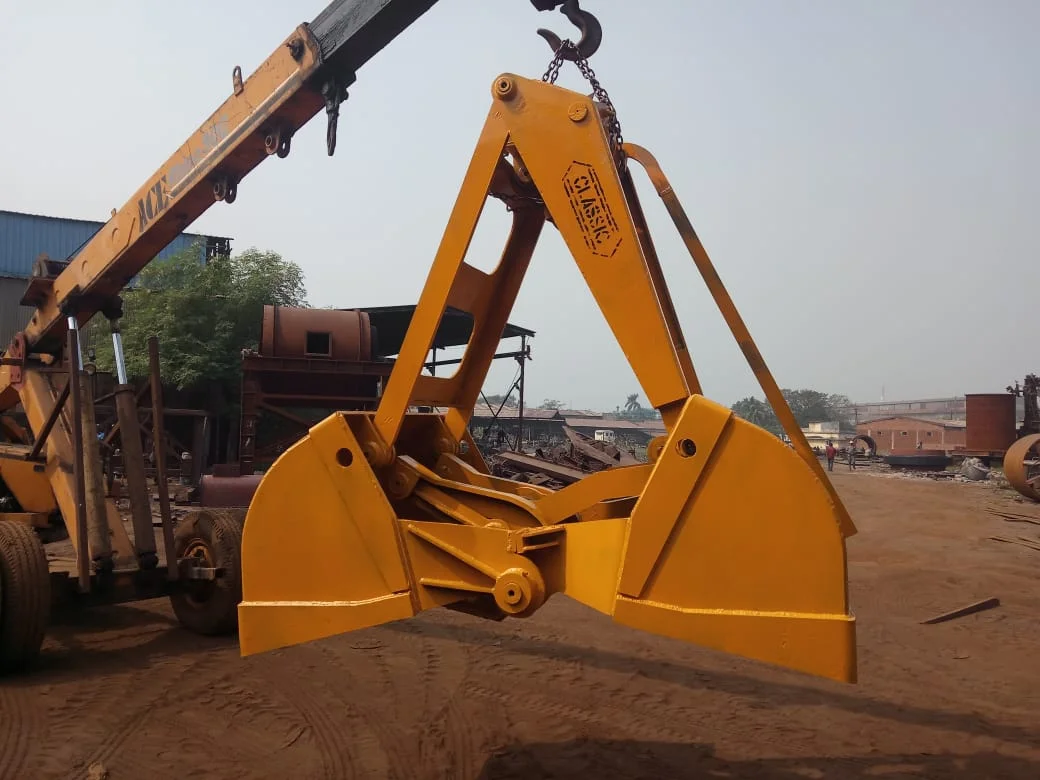
Product Details of Two (Double) Rope Grab Bucket

Two (Double) Rope Grab Bucket


SpecificationDetails
Product TypeDouble Rope Grab Bucket
MaterialHeavy Duty Steel
ApplicationBulk Material Handling
CapacityCustomized According to Requirement
Rope SystemTwo Rope Crane Operation
ConstructionFabricated Steel Structure
FinishPainted / Protective Coating
OperationMechanical Rope Controlled
Material HandledCoal, Ore, Scrap, Bulk Materials
Industry ApplicationSteel, Mining, Ports, Power

How It Works:

  • It operates through a suitable mechanical, electrical, hydraulic, pneumatic, or process-based system.
  • The product works with other equipment to ensure smooth, reliable, and consistent operation.
  • Its design supports stable performance under required operating conditions.
  • Proper installation and operation help ensure better efficiency and longer service life.

Applications & Features

Applications:

  • Industrial Manufacturing.
  • Steel & Metallurgical Industries.
  • Material Handling.
  • Mining & Mineral Processing.
  • Heavy Engineering.
  • Power & Process Industries.
  • Other Industrial Applications.

Features:

  • Heavy-duty industrial design.
  • Robust and durable construction.
  • Reliable performance.
  • Suitable for demanding operating conditions.
  • Designed for continuous operation.
  • Low maintenance requirements.
  • Long service life.
  • Easy integration with industrial systems.
  • Customizable as per application requirements.
  • Manufactured as per required specifications.
Purpose of Kiln Support Roller

Purpose:

  • To support efficient industrial operations.
  • To perform the required function reliably.
  • To improve operational efficiency.
  • To ensure safe and consistent performance.
  • To reduce downtime and maintenance requirements.
  • To provide reliable long-term operation.